The following article by Vanessa
Horwell, Chief Visibility Officer of ThinkInk, originally appeared on Marketing Daily.
I
promised myself I wasn’t going to gloat. One professional’s sorrows are no
cause for celebration, especially when discussing an esteemed journalist like
CNN and Time magazine star Fareed Zakaria, center of last week’s plagiarism
cause célèbre. In fact, many of my MediaPost columns go to great lengths
calming the public relations versus journalism debate, draining the
back-and-forth venom. You know -- that whole Lincoln-inspired, “we’re not
enemies but friends” mantra.
So
if this article isn’t a gloat, let us label it a galvanizing call -- a call for
both sides of the industry to aspire to the “better angels of our [collective]
nature” and put an end to plagiarizing and falsification once and for all.
Considering
the almost absurd glut of easily accessible digital information produced on the
order of some 2.5 quintillion bytes a day (according to IBM), one would think
finding information or becoming inspired with new ways to mold, argue and
utilize that data would be similarly limitless.
And
maybe that’s part of the problem. Maybe the reason Zakaria is but one example
of a long chain of related miscreants is that plagiarism today is as easy as
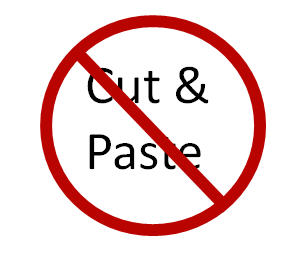
hitting copy and paste. What’s more, in the crowded blogosphere and the 12
terabytes-a-day spewing Twitterverse, opinions -- professional or otherwise --
are about as rampant as Colorado wildfires were back in July. It’s so easy to
get "keyboard happy."
This
latest bout of plagiarism serves an important PR lesson -- and a reminder. Too
often the "Us" versus "Them" internal communications
industry debate is predicated on the false notion that journalists consistently
maintain the moral high road or file their copy in a purely agenda-less vacuum.
Not true. Journalists can be (and are) every bit as flawed -- tempted by the
easy way out of lifting a sentence here, and "borrowing" an idea from
there.
That
doesn’t mean PR execs are factual saints -- far from it. After working my way
up in the industry over the past 20 years, I’ve seen my fair share of beauties.
But let us all put our collective journalist caps on for a moment and think
about what exactly Zakaria did. The truth is Fareed’s failings aren’t as black-and-white as the copy-and-paste reference above
either. Do you really think a Harvard-educated man could be so brazen? And
stupid? Not likely.
Plagiarism isn’t always so cut and dried. Let’s remember that it
isn’t as if Zakaria lifted verbatim the red-flag paragraph in question of his
August, Time magazine column, The Case For Gun Control.
There was at least an attempt at finesse -- of covering his tracks, so to speak
-- and perhaps a subconscious nod toward rationalization. “How much tweaking
and rewording must be done so that what springs forth from my keystrokes will
be truly mine and not regurgitated drivel?” he may have well asked himself over
and over. And if it were such an easy offense to avoid, it is very likely the
topic would not occupy so much lecture time in grad school and undergraduate
journalism classes.
Underscoring
my point, the CUNY Graduate School of Journalism lists the course “Legal and
Ethical Issues” as number two in its roster of five core modules. The
description:
“Through
a rigorous examination of court cases and ethical controversies, students will
learn to anticipate, recognize, and properly address ethical and legal concerns
in journalism.”
Whether
a class like this goes by formal title or if it comes in a weekly editorial and
reporter meeting, you can be sure in newsrooms across America, in papers large
and small, similar “rigorous examinations” are being discussed, debated and
acted upon. So while Zakaria’s actions weren’t necessarily black-and-white,
there clearly was a definitive right or wrong about the issue -- an admission
that he was fast to recognize in his blunt apology.
And
maybe that rapid-fire apology stemmed from his expectation -- one that is
proving true -- that after the tumult settled, after the “fall-from-grace”
explosion of 20/20 media hindsight, in the end the professional response would
be a proverbial slap on the wrist. After announcing suspensions, both Time and
CNN did just that when they quickly reinstated Zakaria.
But
month-long suspensions and disciplinary review don’t cut it. If addressing
legal and ethical issues are as central to the communications industry we all
give lip service to, then the penalties for trampling on those lessons should
be equally severe.
Have
Time and CNN set a precedent for other journalists? Quite likely. Will
plagiarism be going away anytime soon? Not likely. And as for Zakaria, his mea
culpa has been accepted by media and the masses and life will go on.
Some
have argued that this is much ado about nothing, that writers and journalists
are inspired by so many sources it becomes difficult to distinguish where our
own ideas and original content intersect and blur with others. As a writer, I
can understand this argument.
But
inspiration and plagiarism are two different animals. In our age, and in our
industries, where we are tasked with creating original, compelling and clever
content at breakneck speed, we absolutely know this distinction -- we just
don’t care to admit it.
The following article by Vanessa Horwell, Chief Visibility Officer
of ThinkInk, originally appeared on Marketing Daily.


 Posts